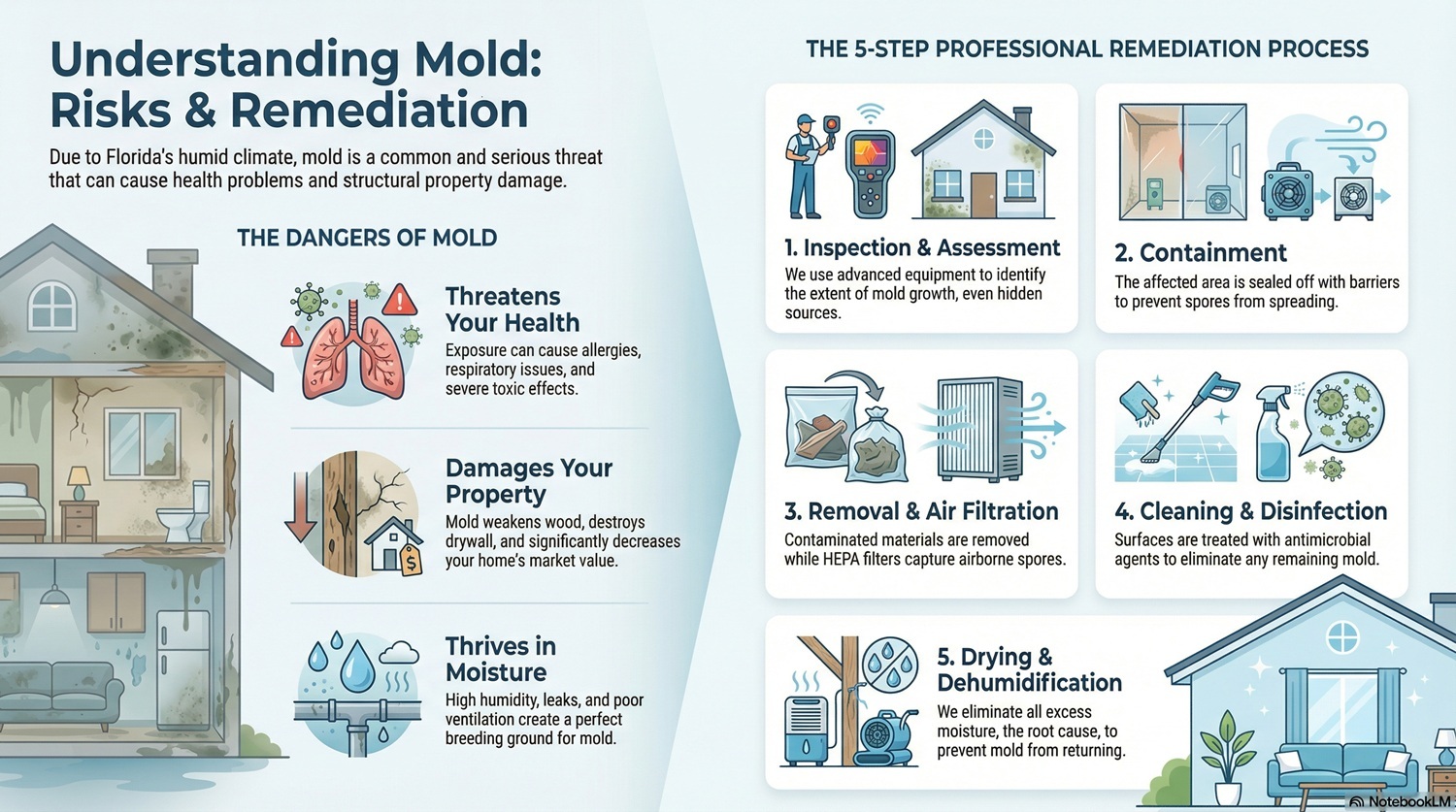
Mold doesn’t wait for an invitation to move into your Clearwater home. In Florida’s humid climate, these unwelcome guests can establish colonies in as little as 24-48 hours after water intrusion. What starts as a small spot can quickly transform into a major health hazard and property nightmare.
Living in Clearwater means constantly battling the perfect storm of conditions for mold growth: high humidity, warm temperatures, and frequent precipitation. When these environmental factors combine with even minor water intrusions, the stage is set for mold to thrive in your walls, under floors, and in other hidden areas. TampaBayMold.net specializes in finding and eliminating these sneaky invaders before they compromise your home’s structure and your family’s health.
Mold isn’t just an unsightly nuisance—it’s a serious threat to both your property and your health. Unlike other home maintenance issues that can often wait, mold requires immediate attention. The longer it grows unchecked, the more extensive the damage becomes and the more difficult and expensive remediation will be. What makes mold particularly concerning is its ability to grow unseen, often flourishing behind walls, under floors, or in attic spaces long before visible signs appear.
The financial impact of ignoring mold can be staggering. What might start as a $500 inspection and minor remediation can quickly escalate to tens of thousands in repairs if structural elements become compromised or extensive remediation becomes necessary.
Clearwater’s climate presents unique challenges when it comes to mold prevention. With average humidity levels frequently exceeding 70% and temperatures that hover in the ideal growth range for mold (68-86°F), your home is essentially sitting in a mold incubator year-round. These conditions make Clearwater properties particularly susceptible to mold problems, even in well-maintained homes.
The proximity to the Gulf of Mexico further compounds the issue, as coastal properties face additional moisture challenges from salt spray, higher humidity levels, and more frequent storms. This environmental reality means that Clearwater homeowners need to be especially vigilant about mold prevention and quick to respond to potential warning signs.
The health implications of living with mold extend far beyond occasional sneezing or coughing. For many Clearwater residents, mold exposure manifests as persistent allergic reactions, including itchy eyes, runny nose, and throat irritation. However, for vulnerable populations—young children, elderly individuals, and those with compromised immune systems or existing respiratory conditions—the consequences can be significantly more severe. For those concerned about these risks, it is crucial to understand the importance of mold remediation to ensure a healthy living environment.
Long-term exposure to certain types of mold, particularly toxic varieties like Stachybotrys chartarum (black mold), has been linked to more serious health complications. These include chronic sinusitis, respiratory infections, asthma development or worsening, and in rare cases, neurological symptoms. The microscopic spores produced by mold are easily inhaled and can trigger inflammatory responses in the lungs and airways, creating both immediate and chronic health issues.
The longer mold grows unchecked in your Clearwater home, the more extensive—and expensive—the damage becomes. What begins as surface-level growth can quickly penetrate porous materials like drywall, insulation, and wood, compromising their structural integrity. Once mold has infiltrated these materials, simple cleaning is no longer sufficient; complete removal and replacement become necessary. For more information on preventing mold issues, check out our guide on how to keep mold growth from happening in your home.
The financial toll quickly adds up when considering the cascading effects of extensive mold damage. Beyond the direct remediation costs, you may face expenses for structural repairs, replacement of damaged possessions, temporary relocation during extensive remediation, and potential decreases in property value. Insurance coverage for mold damage is often limited in Florida policies, leaving homeowners to shoulder significant out-of-pocket expenses when problems escalate.
Recognizing the warning signs of mold infestation early can save you thousands in remediation costs and protect your family’s health. While some indicators are obvious, others are subtle and easy to miss or attribute to other causes. Being attentive to these signals is particularly important in Clearwater’s mold-friendly climate.
Visible mold growth represents just the tip of the iceberg in many infestations. That small patch of greenish-black spots in your bathroom corner or discoloration along your baseboards signals that conditions are right for mold growth throughout your home. Most concerning is what you can’t see—mold growing inside walls, under flooring, above ceiling tiles, or in crawl spaces. To understand more about these hidden dangers, consider reading our guide on preventing mold growth in your home.
Hidden mold is particularly problematic because it can spread extensively before detection. By the time visible signs appear, the colony may have already established a significant foothold in your home’s structure. Professional inspectors use specialized equipment to detect these hidden infestations, looking beyond surface-level symptoms to find the true extent of contamination.
That persistent musty smell in your Clearwater home isn’t just unpleasant—it’s a warning sign. Mold produces volatile organic compounds (VOCs) as it grows and reproduces, creating that distinctive earthy, damp odor that lingers even after cleaning. If you notice this smell consistently in certain areas or throughout your home, it strongly indicates active mold growth, even if you can’t see it.
Many homeowners make the mistake of masking these odors with air fresheners or candles rather than addressing the underlying cause. This temporary solution allows the mold problem to worsen silently. Particularly concerning is when the smell intensifies during humid weather or after rain, which suggests moisture intrusion that’s feeding mold growth.
Any water intrusion event in your Clearwater home—from minor plumbing leaks to major flooding—creates prime conditions for mold growth. The 24-48 hour window following water exposure is critical; this is when mold can begin establishing colonies in damp materials. Even if surfaces appear dry, moisture can remain trapped in subfloors, inside walls, or in other hidden areas.
Water events requiring particular vigilance include roof leaks, overflowing toilets or sinks, washing machine or dishwasher malfunctions, AC condensation line backups, and storm-related flooding. These situations demand prompt professional inspection, even if visible water has been cleaned up and surfaces appear dry. The hidden moisture left behind can fuel extensive mold growth that remains undetected until the damage is severe.
In Clearwater’s climate, even seemingly minor incidents like a window left open during a rainstorm can introduce enough moisture to trigger mold growth. Professional moisture detection is often necessary to identify these potential problem areas before visible mold appears.
When family members experience persistent coughing, sneezing, or respiratory irritation that improves when they leave home, mold could be the culprit. These symptoms often resemble seasonal allergies but follow a different pattern—they’re typically worse when spending time in specific areas of your home or after activities that disturb hidden mold (like moving stored items or using forced-air heating systems).
Pay particular attention if multiple household members develop similar symptoms simultaneously, especially those who don’t typically suffer from allergies. Also noteworthy is if symptoms persist outside typical allergy seasons or don’t respond to allergy medications. These patterns suggest your home environment, potentially mold, is triggering the reactions.
Professional mold inspection in Clearwater homes involves much more than a quick visual scan. Reputable services like TampaBayMold.net employ a comprehensive, scientific approach to detect both visible and hidden mold problems. This systematic process ensures no contamination goes undetected and provides crucial information for developing an effective remediation plan tailored to your specific situation.
The inspection begins with a thorough visual examination of your entire property, including areas often overlooked like crawl spaces, attics, and the spaces behind major appliances. Trained inspectors look for visual signs of mold growth, water damage, excessive moisture, and conditions that promote mold development. They pay special attention to high-risk areas in Clearwater homes, such as bathrooms, kitchens, laundry rooms, and areas with previous water issues.
Professional inspectors know exactly what to look for beyond obvious mold patches. Subtle indicators like discoloration, warping, peeling paint or wallpaper, and unusual staining patterns can all point to hidden mold problems. They also evaluate the overall condition of your home’s building materials and identify potential moisture entry points that could be fueling mold growth. For more information on mold inspections, check out this guide on mold inspection.
When visual inspection raises concerns or symptoms suggest mold that isn’t visible, air sampling becomes an essential diagnostic tool. This scientific process captures airborne mold spores for laboratory analysis, providing critical information about the types and concentrations of mold present in your home. Specialized equipment draws measured volumes of air through collection devices that trap spores for examination. For a comprehensive understanding of mold remediation, check out this ultimate guide.
In addition to air samples, professionals may collect surface samples using swabs, tape lifts, or bulk material collection when visible mold is present. These samples help identify specific mold species and determine whether what appears to be mold is actually mold rather than soot, dirt, or other substances. This precise identification is crucial for developing appropriate remediation strategies, as different mold types may require specialized treatment approaches.
Moisture is mold’s lifeline, and detecting excess moisture is fundamental to identifying potential and active mold growth areas. Professional inspectors use sophisticated tools like infrared thermal imaging cameras, moisture meters, and hygrometers to locate hidden moisture that the naked eye can’t detect. These technologies can pinpoint dampness inside walls, under floors, and in other concealed spaces without destructive testing. For more information on how to manage mold in your home, check out our guide on keeping mold growth from happening.
Thermal imaging is particularly valuable in Clearwater homes, where high ambient humidity can mask moisture problems. These cameras detect temperature differences that indicate moisture presence, even in areas that appear completely dry. When combined with moisture meters that measure the actual moisture content of materials, inspectors can precisely map problem areas and identify the source of water intrusion feeding mold growth.
The samples collected during inspection are sent to specialized environmental laboratories for analysis under controlled conditions. Trained microbiologists examine the samples to identify specific mold species present in your home and determine their concentrations. This analysis distinguishes between normal background mold levels found in all Clearwater homes and elevated concentrations that indicate active growth problems.
The laboratory report typically includes identification of mold types present, their relative concentrations, and comparison to outdoor baseline levels. This scientific data helps determine whether remediation is necessary and guides the development of an appropriate treatment plan. It also provides valuable documentation for insurance claims, real estate transactions, or health-related concerns.
Clearwater’s unique climate creates favorable conditions for several mold varieties, each with distinct characteristics and potential health impacts. Understanding these common invaders helps homeowners recognize the severity of their mold situation and the importance of proper remediation. While hundreds of mold species exist, certain types appear with particular frequency in Florida homes.
Perhaps the most infamous mold variety, Stachybotrys chartarum (commonly called black mold) thrives in consistently damp environments with high cellulose content—making damp drywall, wood, and paper-faced products ideal breeding grounds. Its distinctive dark green to black coloration and slimy texture make it recognizable when visible, though it often grows hidden behind walls or under flooring. Black mold produces potent mycotoxins that can cause more severe health reactions than many other mold types, particularly with prolonged exposure.
In Clearwater homes, black mold commonly appears following major water intrusions like flooding, long-term plumbing leaks, or chronic humidity issues in poorly ventilated spaces. Its presence typically indicates a significant moisture problem that has persisted for weeks or months. Professional remediation is absolutely essential when dealing with Stachybotrys due to both its health risks and its indication of serious underlying moisture issues.
When water enters your Clearwater home, time becomes your most precious resource in preventing mold growth. The 24-48 hour window after water exposure is critical—this is when moisture can be addressed before mold establishes colonies. Immediate extraction of standing water followed by industrial-grade dehumidification can make the difference between a simple cleanup and extensive remediation services.
Professional water damage response teams use specialized equipment like commercial extractors, high-capacity dehumidifiers, and high-velocity air movers to rapidly dry affected areas. This quick response is particularly important in Clearwater’s humid climate, where natural evaporation happens slowly and ambient moisture levels are already high. Remember that visible drying of surfaces doesn’t necessarily mean structural materials are dry—moisture can remain trapped in subfloors, wall cavities, and insulation without professional drying techniques.
With numerous companies advertising mold services in the Clearwater area, selecting the right professional can feel overwhelming. The stakes are high—improper remediation can leave mold problems unresolved or even worsen contamination. Your health, property, and financial investment deserve protection through careful selection of qualified, experienced professionals who understand Florida’s unique mold challenges.
Florida law requires mold assessors and remediators to hold proper licensing through the Department of Business and Professional Regulation. Never work with a company that can’t provide valid license documentation. Legitimate Clearwater mold remediation companies should carry both general liability insurance and specific mold pollution liability coverage, which protects you if problems arise during or after remediation work. For more details, you can refer to the ultimate guide to mold remediation in Clearwater. Ask for certificates of insurance and verify coverage directly with the insurance provider before signing any contracts.
Clearwater’s coastal climate presents distinct mold challenges that differ from those in other regions. Companies with extensive local experience understand these nuances and have developed effective strategies for addressing them. Ask prospective companies about their specific experience with coastal Florida properties and the common mold species found in our region.
Qualified professionals should be able to discuss how they adapt remediation approaches to account for Clearwater’s high humidity, frequent storms, and year-round warm temperatures. They should demonstrate knowledge of local building practices and common moisture intrusion points in Florida construction styles.
Look for companies with a proven track record spanning several years in the Clearwater area. Established local businesses with deep community roots are typically more reliable than national chains or newly formed operations without a verifiable history in our region.
Reputable mold remediation services provide clear, detailed cost estimates that break down every aspect of the work to be performed. Beware of vague estimates or companies that quote prices significantly lower than others—this often signals corners will be cut or “unexpected” costs will appear later. A professional proposal should clearly outline containment methods, removal procedures and cleaning protocols.
The contract should specify exactly which areas will be treated, which materials will be removed versus cleaned, and what verification testing will be performed to confirm remediation success. It should also include guarantees of work quality and clearly stated policies regarding additional charges if more extensive mold is discovered during remediation. Don’t hesitate to ask questions about any contract terms you don’t fully understand before signing.
One of the most critical components of professional mold remediation is proper verification that the work was successful. Reputable Clearwater remediation companies either include third-party verification testing or can recommend independent testing companies to confirm their work. This “clearance testing” should be performed by someone other than the remediation contractor to avoid conflicts of interest.
Verification testing typically includes air sampling, surface sampling, and visual inspection to confirm that mold has been successfully removed and conditions are no longer conducive to mold growth. The testing should compare indoor air quality to outdoor baseline levels and verify that affected areas have been properly cleaned and dried.
Request documentation of these test results for your records—they provide valuable proof of remediation success for your peace of mind, future home sales, and insurance purposes. A company that resists or discourages independent verification testing should be viewed with caution.
Verify that the company follows industry standards for post-remediation verification, such as those established by the Institute of Inspection, Cleaning and Restoration Certification (IICRC) or the Indoor Air Quality Association (IAQA). These standards ensure thorough assessment of remediation effectiveness.
“The best remediation companies welcome independent verification testing because they’re confident in their work quality. If a company discourages this step, consider it a red flag.” – Florida Department of Health Mold Advisory
Understanding the financial investment required for professional mold remediation helps homeowners budget appropriately and recognize the value of thorough treatment. Costs vary significantly based on numerous factors specific to each situation, but having general guidelines helps prevent sticker shock and enables comparison shopping among qualified providers.
| Severity Level | Approximate Size | Typical Cost Range | Timeline |
|---|---|---|---|
| Minor | Less than 10 sq ft | $1200-$2,500 | 1-2 days |
| Moderate | 10-100 sq ft | $2,500-$5,000 | 2-5 days |
| Major | 100-1,000 sq ft | $5,000-$10,000 | 5-10 days |
| Extensive | 1,000+ sq ft | $10,000-$30,000+ | 10+ days |
Remember that these figures represent remediation costs only and may not include additional expenses for reconstruction of removed building materials, cosmetic repairs, or addressing the underlying moisture issues that caused the mold. Complete restoration after extensive mold damage can sometimes reach $50,000 or more in severe cases affecting multiple rooms or structural components.
While these costs may seem substantial, they must be weighed against the alternatives: declining property values, continuing health impacts, and progressive structural damage that becomes more expensive to address over time. Early intervention typically results in significantly lower overall costs compared to delayed treatment after mold has spread extensively throughout a property. For more information, check out this ultimate guide on mold remediation.
Multiple variables influence the final cost of mold remediation in your Clearwater home. The extent of contamination is obviously a primary factor, but location also matters significantly—mold in crawl spaces or attics with difficult access requires more labor and specialized equipment than easily accessible areas. The types of materials affected also impact cost; porous materials like drywall and insulation typically require removal and replacement, while non-porous surfaces may be successfully cleaned and sanitized at lower expense. Additional cost factors include the need for containment systems to prevent cross-contamination, specialized filtration equipment, testing requirements, and whether structural components require treatment or replacement.
In Clearwater, minor mold issues limited to small surface areas typically cost $1,200-$2,500 to remediate professionally, while moderate problems affecting 10-100 square feet generally range from $2,500-$5,000 depending on accessibility and materials involved. Major remediation projects addressing widespread contamination across multiple rooms or affecting structural elements can range from $5,000-$10,000, with extensive whole-house contamination potentially exceeding $30,000, especially when reconstruction costs are included. These figures emphasize why early detection through professional inspection is so valuable—catching and addressing mold problems early can save thousands in remediation expenses.
Florida insurance policies typically offer limited coverage for mold damage, with many policies capping mold-related claims at $10,000 or less, regardless of actual remediation costs. The key distinction insurance companies make is between “sudden and accidental” water events (like burst pipes) versus long-term moisture issues (like ongoing leaks or humidity problems). Most policies only cover mold resulting from covered water damage events, not mold stemming from maintenance issues, construction defects, or flooding. Carefully review your policy’s specific language regarding mold coverage, as Florida insurers have increasingly restricted mold coverage over the years in response to the state’s high humidity and frequent water damage claims. For more information, you can refer to the ultimate guide on mold remediation in Clearwater.
Protecting your Clearwater home from mold damage requires vigilance, prompt action when issues arise, and partnership with qualified professionals who understand our unique local challenges. By recognizing warning signs early, addressing moisture problems immediately, and investing in professional inspection and remediation when needed, you can maintain a healthy living environment for your family while preserving your property’s value and structural integrity. Remember that TampaBayMold.net offers comprehensive mold services tailored specifically to Clearwater’s climate and building characteristics, with the expertise to detect, remediate, and prevent mold issues effectively.
Homeowners in Clearwater frequently have questions about mold inspection and remediation services. Understanding these common concerns helps you make informed decisions about protecting your property and family from mold-related problems.
Here are answers to the most common questions we receive from Clearwater residents:
“In Florida’s warm, humid climate, mold can begin growing within 24-48 hours after water exposure, making rapid response essential for preventing established infestations.” – Florida Department of Health
Mold spores are always present in the environment, just waiting for the right conditions to grow. In Clearwater’s climate, these conditions develop rapidly after water intrusion. Within just 24-48 hours after materials become wet, mold can begin establishing colonies that grow exponentially as time passes. This rapid timeline is why emergency water extraction and drying services are so critical following any water event, from minor leaks to major flooding.
The speed of growth accelerates in Clearwater’s warm temperatures, particularly during summer months when indoor temperatures often reach the ideal range for mold proliferation (77-86°F). The timeline can be even shorter in enclosed spaces with poor ventilation, such as closets, cabinets under sinks, or areas behind large furniture pieces.
This rapid growth cycle underscores why professional inspection following any water event is so important, even if you don’t see visible mold. By the time visible growth appears, the colony is already well-established and producing millions of spores that can spread to other areas of your home.
Whether you can remain in your home during remediation depends on several factors, including the extent of contamination, your health sensitivity, and the specific remediation approach being used. For minor, contained remediation in a single area, occupants can often remain in the home while work proceeds. However, extensive remediation involving multiple rooms, HVAC systems, or using strong antimicrobial treatments typically requires temporary relocation for safety and comfort. This is particularly important for individuals with respiratory conditions, compromised immune systems, or demonstrated sensitivity to mold.
Professional remediation companies use containment systems and negative air pressure to prevent cross-contamination of clean areas, but some remediation activities inevitably release spores and particulates that can affect indoor air quality throughout the property. Your remediation contractor should provide specific recommendations based on your situation and the scope of work required.
Typical mold remediation projects in Clearwater homes range from 1-2 days for minor issues to 5-10 days for more extensive contamination. However, severe cases affecting multiple rooms or requiring substantial reconstruction can take several weeks to complete fully. The timeline depends on factors including the extent of contamination, the materials affected, whether structural elements require treatment, and drying time requirements in our humid climate. Additional variables include the need for specialized treatments for certain mold types and whether post-remediation verification testing reveals any areas requiring additional attention.
Professional remediation companies should provide a projected timeline before work begins, with the understanding that hidden damage discovered during the process may extend this estimate. Rushing remediation to meet arbitrary deadlines often results in incomplete removal and recurring problems, so ensuring thorough treatment should take priority over speed.
Professional remediation, when properly performed, should prevent mold recurrence in the treated areas as long as the underlying moisture issues have been permanently resolved. However, if the source of moisture that originally fed the mold growth hasn’t been addressed—such as leaky plumbing, roof defects, or inadequate ventilation—new mold colonies can develop even after thorough remediation. This highlights why proper moisture source correction is an essential component of effective remediation services, not merely removing existing mold.
Mold remediation expenses may be tax-deductible in certain specific circumstances, though tax laws change frequently and individual situations vary. Generally, remediation costs for investment properties can be deducted as business expenses. For primary residences, remediation might qualify as a medical expense deduction if documented by a healthcare provider as medically necessary due to specific health conditions affected by mold exposure.
Some homeowners may also qualify for capital improvement treatment of remediation costs when selling their home, potentially reducing capital gains taxes. However, standard remediation in primary residences typically doesn’t qualify for immediate tax deductions under current tax laws.
Always consult with a qualified tax professional regarding your specific situation and current tax regulations before claiming deductions related to mold remediation expenses. Documentation of all expenses and the medical necessity (if applicable) is essential for supporting any tax claims.
For comprehensive mold inspection services in Clearwater that identify problems early and prevent costly damage, contact the experts at TampaBayMold.net. Our team specializes in thorough assessments, effective remediation, and long-term prevention strategies tailored to Florida’s unique climate challenges.